
Cryptocurrency: Fad or Future?
The post Cryptocurrency: Fad or Future? appeared first on The Economic Transcript.
From the trenches of Reddit to the forefront of Twitter, cryptocurrency has dominated conversation on-and-off for close to a decade. To truly make sense of the perceived glamour of the currency, it is important to differentiate fact from fiction and understand how it is priced, what makes it so susceptible to volatility and why some governments and central banks consider crypto a direct threat to their influence on the economy.
It is helpful to think of cryptocurrency as a subset of digital currency. For example if one were to create a digital coin issued by the Central Bank of a country, it would be regulated by existing laws and would be termed as a Central Bank Digital Currency or CBDC (this currently exists only in conceptual form with proposals made by governments in England, Sweden and Uruguay). This is not a cryptocurrency. A cryptocurrency is a special form of digital currency whose value is only determined by cryptography, which is used to secure and verify transactions, like Bitcoin or Ethereum.
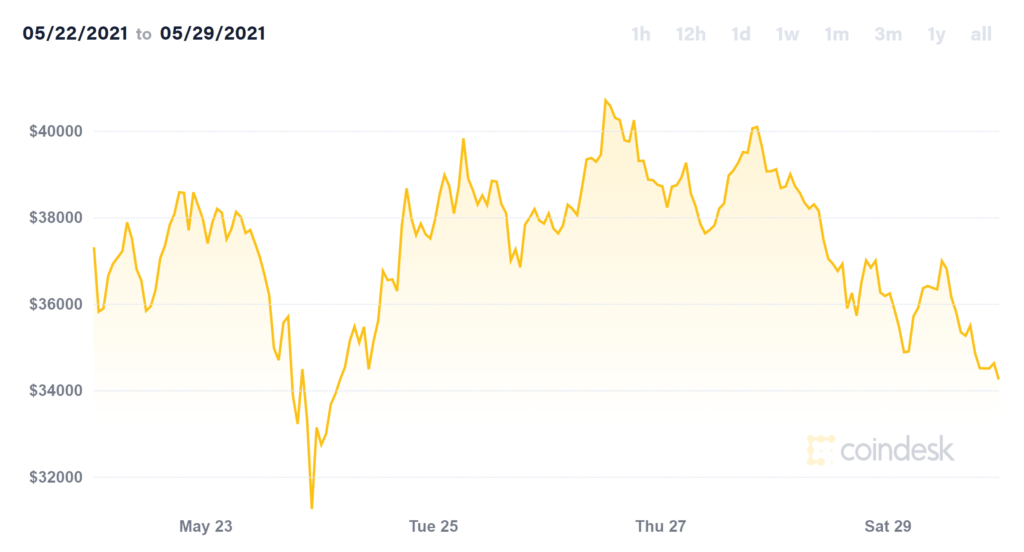
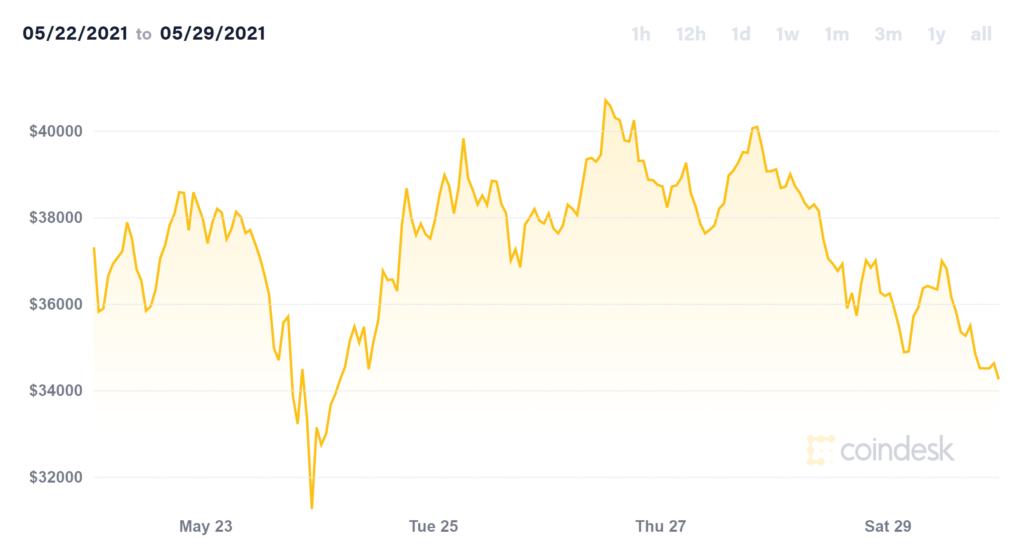
Historical precedent shows us that volatility in crypto prices is commonplace. In the three month span between October 2017 and January 2018, the volatility of the price of Bitcoin reached nearly 8%. More recently, in the week ending on 28th May, 2021 Bitcoin prices ranged from $40,702 to $31,248.
It is difficult to pinpoint one core reason for volatility in prices. A far more accurate description would be several causes like current geo-political scenario, fluctuations in perception of value against fiat currency, uncertainty in regulatory practices which differ across the globe and so on: all working in tandem with each other.
For example: according to the Internal Revenue Service (IRS) of the United States government, all virtual currencies are treated as ‘property’ and tax principles applicable to transactions concerning properties are extended to virtual currencies.
While this has a positive impact in terms of recognition of currencies like Bitcoin and Etherum as legitimitate, there is an added complexity for users to record the market value of the currency every time they want to use it as a form of payment. Added concerns about the IRS’ plans to regulate cryptocurrency, something which is guaranteed to slow adoption rate, further lifts volatility in the market.
Unfolding over the course of several weeks on Elon Musk’s Twitter account, what started as a massive boost to both the popularity and lucrativeness of Bitcoin has slowly unfurled into a tale of caution about the power that a single individual (or a small group of individuals) hold over purportedly decentralised currencies.
On Monday, February 8th, 2021, according to a filing submitted to the US Securities and Exchange Commission (SEC), Tesla updated it’s investment policy to provide more flexibility and further diversify and maximize returns on their cash. They subsequently invested $1.5 Billion in Bitcoin and also stated that they expected to accept Bitcoin as payments for products in the near future.
This announcement came amidst significant activity which included adding #bitcoin to his Twitter bio and cryptic tweets such as: ‘In retrospect, it was inevitable’, posted on 29th January. This led to Bitcoin prices skyrocketing by 20%, adding $5,000 in the space of an hour.
A seasoned executive, and an institutional giant like Tesla, accepting Bitcoin for purchases did much to boost credibility of the currency. However, he had a change of heart in late April, selling 10% of its holdings to prove liquidity of Bitcoin as an alternative to holding cash. While Musk was quick to backtrack by saying that his personal investments remained intact, the damage was already done.
This was further bolstered by Tesla announcing on May 13th that they would not accept Bitcoin as payment for their products, a decision driven by the massive carbon footprint that mining Bitcoin leaves on the environment. The seemingly contradictory nature of Musk’s views on Bitcoin left many in the investment community perplexed.
However, the extent of Musk’s influence on Bitcoin’s price remains to be seen. The first massive dip, after an all time high in February, was in late April – weeks before Tesla announced that it would not accept Bitcoin as payments. A convincing argument about Bitcoin being overbought and was headed for a downward correction, with Musk acting as a catalyst, can be made.
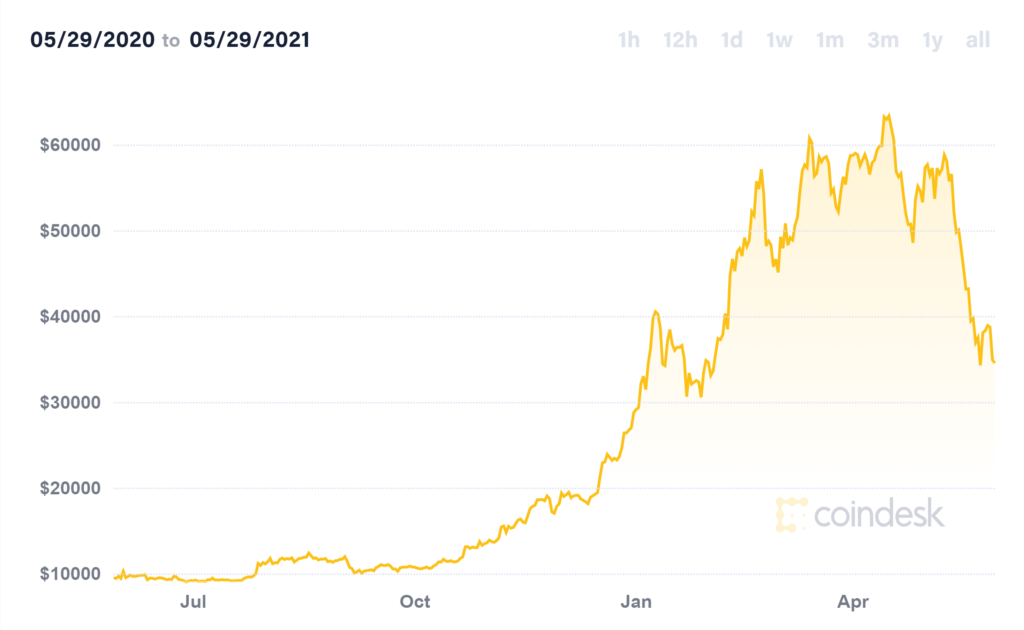
A fall of this scale is minor for an asset like Bitcoin, which is up 300% compared to last year. While Musk wields significant influence over investor sentiments, it is important to remember that the long-term outlook remains positive.
A statement released late Friday, 21st May, 2021, in China by the Vice Premier Liu He, said that it is necessary to “crack down on Bitcoin mining and trading behavior, and resolutely prevent the transmission of individual risks to the social field”.
With a similar statement from the US Federal Reserve Chairman Jerome Powell, who said that cryptocurrency poses risks to financial stability and India’s HDFC bank (with assets worth $220B under management) calling crypto a fad, the general position of both central banks and private lenders on crypto is becoming clear.
Following the statement, several exchanges like Huobi Mall and BTC.TOP announced suspension of their China businesses. With a previous ban on crypto exchanges in Beijing in 2017, China slid down further in its position as a viable cryptocurrency trading center.
While an outright ban on people holding cryptocurrencies has not been implemented, following the statement over 480,000 people liquidated their assets amounting to a whooping $5.92B. This represents changing attitudes among the general Chinese population, and businesses, and willingness to comply with government regulations, regardless of how far the world moves on with cryptocurrency.
Written By – Anusha Paul Choudhury
Edited By – Mallika Rahane
The post Cryptocurrency: Fad or Future? appeared first on The Economic Transcript.

Los Angeles County filed a civil lawsuit against Roblox, alleging that the platform markets itself as a gaming experience for children but has created a ‘largely unsupervised online world’ that allows adults to mingle with minors with very little oversight.
The Commodity Futures Trading Commission (CFTC) is stepping in to stop what it calls an “onslaught” of state-level regulation of prediction markets. CFTC Chairman Michael Selig said Tuesday in a video posted on X that the agency has filed a “friend
Warner Bros. Discovery said Tuesday that it was reopening talks with Paramount Skydance, giving the studio a week to rival Netflix in its bid to take over the streaming and cable giant. In a statement, Warner Bros. Discovery said it had