

Producer Prices for Goods Rise and Fall with Oil Prices
Ever since Federal Reserve Chairman Jerome Powell described cyclical or COVID-related elements of inflation as "transitory" (an ambiguous phrase now retired), critics repeatedly seized on year-to-year changes in price indexes as evidence that inflation was instead accelerating every month. As I
Inflation: A Brief Look Back, and A Path Forward
Starting with the April 2021 release, virtually every monthly Consumer Price Index (CPI) report has indicated some form of abnormally high inflation. For instance, the April CPI rose 4.2 percent over the previous 12 months, the largest year-to-year increase since
An Unnecessary Evil: How Canada ended up Insuring Bank Deposits
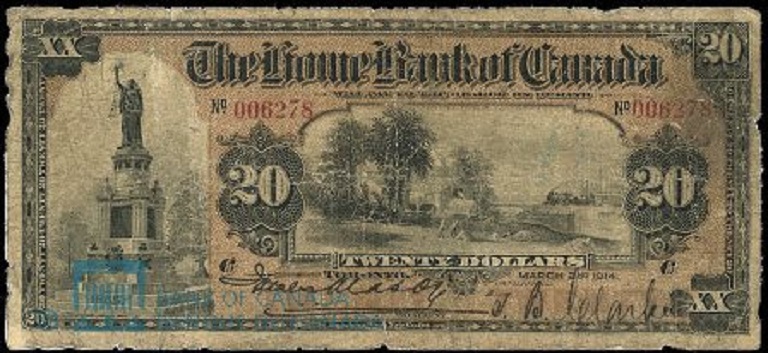
I've often drawn attention here to the virtues of the Canadian banking system, especially as it was between the passage of Canada's first Bank Act in 1871 and the establishment of the Bank of Canada in 1935. After the Scottish

A Three-Pronged Blunder, or, What Money is, and What it Isn’t
"The fateful errors of popular monetary doctrines which have led astray the monetary policies of almost all governments would hardly have come into existence if many economists had not themselves committed blunders in dealing with monetary issues and did not

About Your Proposal for Better Payment Arrangements: Does it Pass the Market Test?
Many economists acknowledge that ordinary private goods and services need to “pass the market test”—generate revenue in excess of expenses—to show that consumers’ benefits (revealed by a willingness to pay) exceed producers’ outlays. But they make an exception when it

In Defense of Bank Deposits: An Open Letter to Professor Omarova
Saule Omarova Beth and Marc Goldberg Professor of Law Cornell Law School Ithaca, NY Dear Professor Omarova, As you probably know, I'm among the critics of the plan for "democratizing money" that you outline in your forthcoming Vanderbilt Law Review article. I disagree with it

Central Banking and Climate Change
There is increasing pressure on central banks to take climate change into account in formulating monetary policy. The Bank of England and the European Central Bank have already done so, and the Fed may follow suit. Indeed, the Fed’s move

China’s Digital Yuan: A Threat to Freedom
Many observers are treating China’s plan for a central bank digital currency (CBDC) as a strictly progressive, technical move that other nations should emulate. The United States, in particular, is concerned that China already has a large head start, which

Reifschneider and Wilcox’s Case for a Three Percent Inflation Target
In view of the Fed's failure to achieve two percent inflation for much of the post-2007 period, the suggestion that it will find it easier to hit a higher target may well strike many as perverse—as if someone suggested that

The End of Bretton Woods, Jacques Rueff, and the “Monetary Sin of the West”
August 15, 2021 marks the 50th anniversary of the day President Richard Nixon “closed the gold window,” ending the postwar Bretton Woods international monetary system. It is an appropriate moment to reconsider the internal inconsistencies of the Bretton Woods system.